

Is a biography a primary source? This is a question many students, teachers, and curious readers ask when studying history, literature, or social studies. At first glance, the answer may seem simple, but once you dig a little deeper, things get interesting. Biographies sit in a unique space between storytelling and historical record, which can make them tricky to classify.
In this detailed guide, we’ll clearly explain is a biography a primary source, using simple Grade 7 English, clear examples, helpful tables, and easy explanations. By the end, you’ll feel confident explaining this topic in class, writing it in an exam, or using it correctly in research. Let’s dive in—step by step.
Understanding the Question: Is a Biography a Primary Source?
To answer is a biography a primary source, we must first understand what the question is really asking. When historians and researchers study the past, they rely on sources of information. These sources help us understand what happened, who was involved, and why events matter.
A biography is a book or article that tells the story of a person’s life. It often includes:
- Important life events
- Personal achievements
- Challenges and failures
- Historical context
But here’s the catch: most biographies are written after the person’s life events have already happened. That detail makes all the difference.
What Is a Primary Source?
Before deciding is a biography a primary source, we need to clearly define what a primary source is.
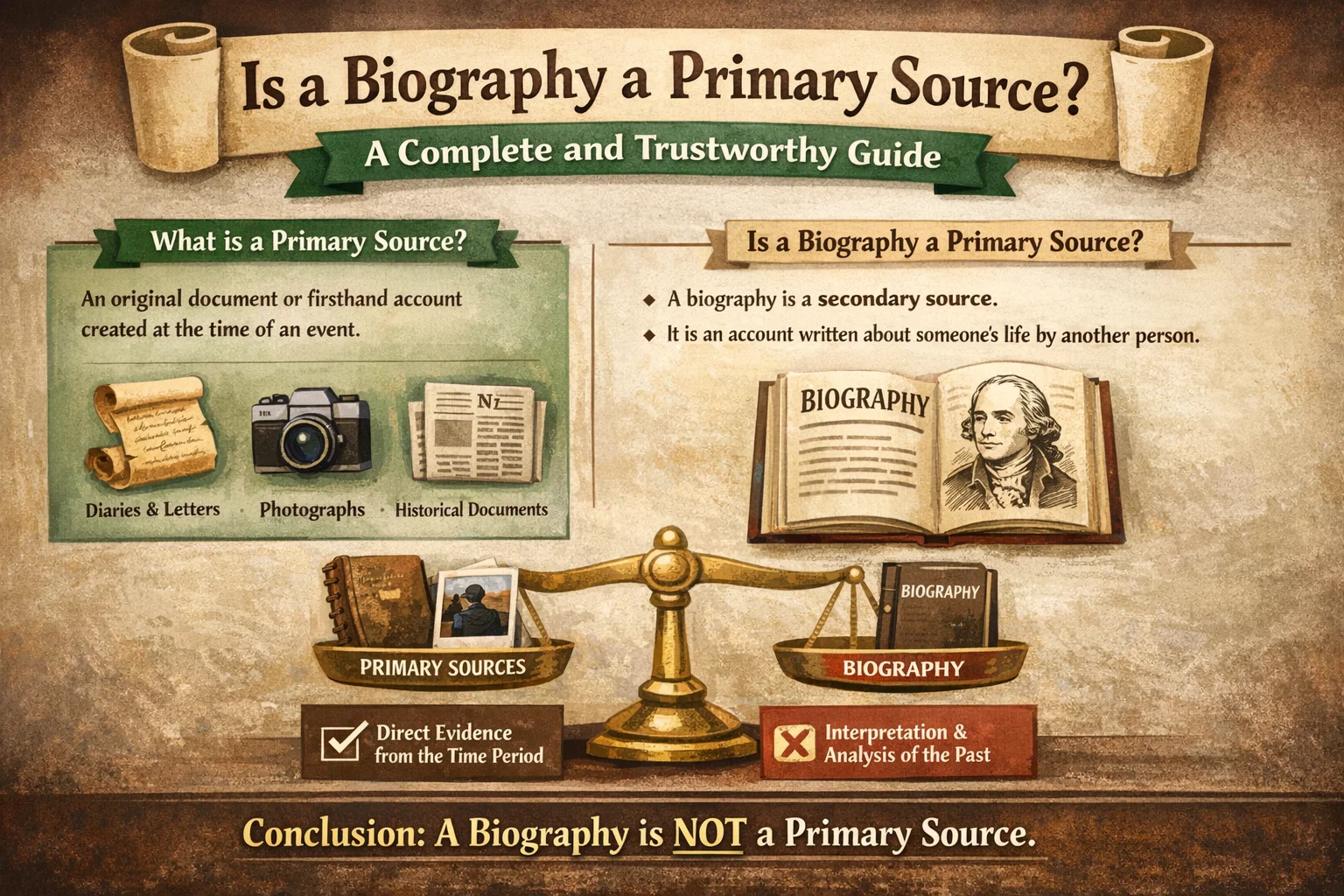
A primary source is an original record created by someone who directly experienced an event. These sources come straight from the time period being studied. In other words, they are first-hand accounts.
Common Examples of Primary Sources
- Diaries and journals
- Letters and emails
- Autobiographies
- Photographs taken at the time
- Original speeches
- Interviews
- Government documents
Primary sources are valuable because they give us a direct window into the past. They haven’t been filtered or summarized by someone else.
What Is a Secondary Source?
Now that we know what a primary source is, let’s look at its counterpart.
A secondary source is created after an event has occurred. It is usually written by someone who did not directly experience the event. Secondary sources analyze, explain, or interpret primary sources.
Common Examples of Secondary Sources
- Textbooks
- History books
- Documentaries
- Encyclopedias
- Most biographies
This brings us back to our main question: is a biography a primary source, or is it a secondary source?
Is a Biography a Primary Source or a Secondary Source?
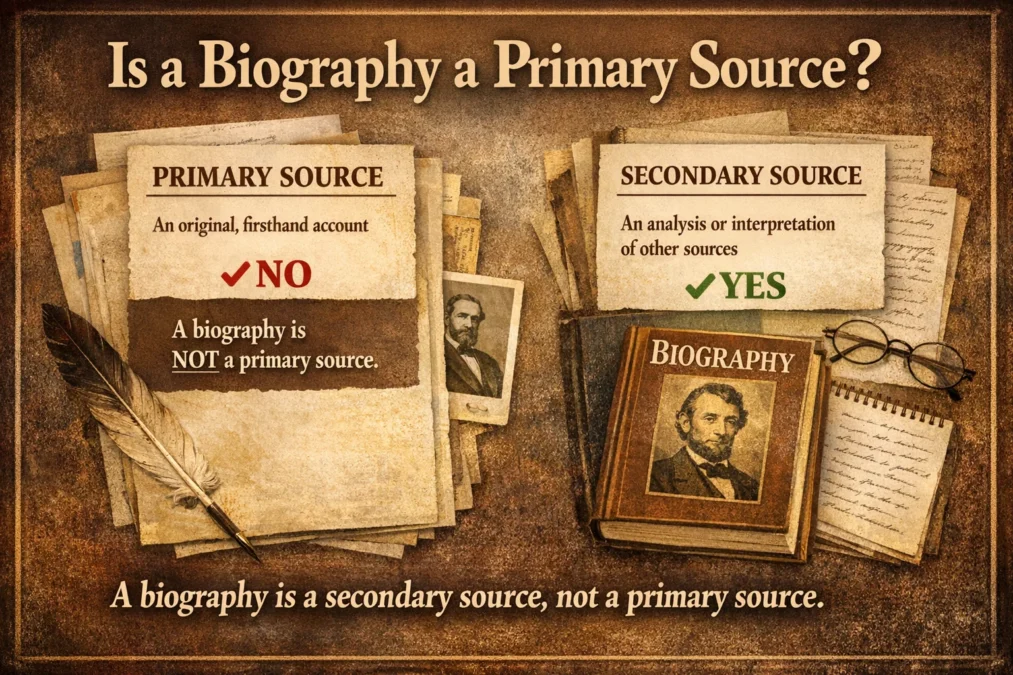
In most cases, a biography is not a primary source. It is usually considered a secondary source.
Why? Because biographies are typically written by someone other than the person being described. The author collects information from letters, interviews, journals, and other records, then interprets and organizes that information into a narrative.
So, when asking is a biography a primary source, the general answer is:
No, a biography is usually a secondary source.
However—and this is important—there are exceptions.
When Can a Biography Be a Primary Source?
Here’s where things get interesting. Sometimes, a biography can act as a primary source, depending on how and when it was created.
Situations Where a Biography May Be a Primary Source
- The biography was written during the person’s lifetime
- The author personally knew the subject
- The book includes direct interviews conducted by the author
- The biography records first-hand observations
For example, if a close friend writes about someone’s life while living through the same events, parts of that biography may be considered primary source material.
Still, even in these cases, historians often treat biographies with care.
Biography vs Autobiography: A Key Difference
To fully understand is a biography a primary source, we must compare it with an autobiography.
What Is an Autobiography?
An autobiography is written by the person about their own life. Since the author is sharing first-hand experiences, autobiographies are usually considered primary sources.
Key Differences at a Glance
| Feature | Biography | Autobiography |
|---|---|---|
| Written by | Someone else | The person themselves |
| Perspective | Third-person | First-person |
| Source type | Usually secondary | Usually primary |
| Based on | Research and records | Personal experience |
This comparison makes it clear why the question is a biography a primary source usually leads to a “no.”
Why Biographies Are Usually Secondary Sources
Let’s break this down in simple terms.
Biographies are usually secondary sources because:
- The author did not live the subject’s life
- Information comes from many other sources
- The author adds interpretation and opinion
- Events are explained after they happen
In short, the biography is one step removed from the original experience. It’s like hearing a story from someone who heard it from someone else.
That doesn’t make biographies unimportant—far from it. They’re incredibly valuable, just not usually primary sources.
The Value of Biographies in Research and Learning
Even though the answer to is a biography a primary source is usually “no,” biographies still play a vital role in education and research.
Why Biographies Matter
- They provide clear summaries of complex lives
- They connect personal stories to historical events
- They help readers understand cause and effect
- They make history more engaging and relatable
Biographies often combine many primary sources into one readable story. That’s a huge advantage, especially for beginners.
How Teachers and Exams Treat the Question: Is a Biography a Primary Source?
In schools and exams, the question is a biography a primary source usually expects a clear and simple answer.
Typical Exam-Friendly Answer
A biography is usually a secondary source because it is written by someone other than the person being described and is based on existing information.
Teachers may also award extra marks if you mention exceptions or compare biographies with autobiographies.
How to Tell If a Biography Is a Primary or Secondary Source
If you’re unsure whether a biography counts as a primary source, ask yourself these questions:
- Who wrote it?
- When was it written?
- Did the author witness the events?
- Does it include direct, original material?
Quick Checklist
- Written long after events → Secondary source
- Written by the subject → Autobiography (primary)
- Written by a witness → May include primary elements
This method helps you confidently answer is a biography a primary source in any situation.
Common Misunderstandings About Biographies as Sources
Many learners get confused about this topic. Let’s clear up a few common mistakes.
Misconception One
“Biographies are primary sources because they talk about real people.”
Reality: Talking about real people doesn’t make a source primary. The author’s role matters.
Misconception Two
“All old books are primary sources.”
Reality: Age alone doesn’t decide the source type.
Misconception Three
“If a biography uses letters, it becomes a primary source.”
Reality: The letters are primary sources, but the biography itself is still secondary.
Is a Biography a Primary Source in Digital Research?
In today’s digital age, biographies are everywhere—websites, eBooks, online articles, and databases. Does the format change the answer to is a biography a primary source?
The short answer: no.
Whether printed or digital, a biography is classified by how it was created, not where it appears. Online biographies are still usually secondary sources.
Using Biographies the Right Way in School Projects
When working on assignments, it’s important to use sources correctly.
Best Practices
- Use biographies for background information
- Pair biographies with primary sources
- Always check your teacher’s instructions
- Label your sources correctly in citations
Doing this shows critical thinking and strengthens your work.
Why the Question “Is a Biography a Primary Source” Really Matters
You might wonder why teachers and researchers care so much about this question.
The answer is simple: understanding sources helps us think critically. When we know where information comes from, we can judge how reliable it is and how it should be used.
Asking is a biography a primary source teaches us to:
- Question information
- Understand perspective
- Separate fact from interpretation
That’s a powerful skill, not just in school, but in everyday life.
Final Thoughts: Is a Biography a Primary Source?
So, let’s bring it all together.
Is a biography a primary source?
In most cases, no. A biography is usually a secondary source because it is written by someone who did not directly experience the events and is based on other materials.
However, some biographies may include primary source elements, especially if written by close witnesses or during the subject’s lifetime. Still, they are generally treated as secondary sources in academic settings.
Understanding this distinction builds strong research skills, boosts confidence, and helps you use information wisely. And honestly, once you get it, it just clicks.
Keep asking smart questions, stay curious, and remember: knowing is a biography a primary source is a small lesson that leads to big thinking.